Sunday, January 28, 2007

Explore Kazakh Music Online


Somebody somewhere has created this nifty little Shockwave Flash jukebox, loaded with 32 random selections of Kazakh music. Some of it is more traditional, some of it is contemporary pop. I'm not quite sure who the author of the site it; clues make me think it might be a project of a Kazakh-language student (learning Kazakh is on the to-do list for my next lifetime) In any case, check it out (click on the image for the link).

Below are links to more, including music videos on YouTube, articles and mp3 files. Explore!

Monday, January 22, 2007

Kazakh Cooking Experiment #1 : Manti

It seems that few of the dishes that I consider to be traditionally Kazakh aren’t also claimed as national dishes of other Central Asian peoples; the only one I can think of is beshbarmak. Something about the other ‘Stans has grabbed global imagination more so than Kazakhstan has -- there's plenty on oil, politics, and adoption, but comparatively little depth of research and information available on Kazakh culture, as opposed to the music, history and lore of Uzbekistan, for instance.

My hypothesis is that three factors are in play here -- 1) Kazakh culture was nomadic and orally transmitted (the old “moving target” research problem, with no ancient texts or libraries to consult); 2) most of the Kazakh territory is north of the traditional Silk Road routes, not directly involved in the cultural exchanges related to trade of that time, and mostly overlooked in contemporary “Silk Road revival” events; and 3) fully one-fourth of the ethnic Kazakh population died of starvation in the middle of the 20th century, thanks to poorly executed Soviet agricultural collectivization programs. With them perished a quarter of the cultural memory of the people.

All this to say that when I went to make manti this evening, the recipe (in Please to the Table, p. 409) is titled “Uzbek Steamed Lamb Dumplings.” (I’ve also seem them described as Turkish, Tatar, and Caucasian.) This was a pretty successful attempt, more or less resembling the manti the kids and I remember eating in KZ, so I’ll pass what I did and what I Iearned.

Since I don’t like lamb (neither does Gulnara, so I don’t feel terribly inauthentic here), I substituted ground beef. It works just as well. You need some sort of steamer basket arrangement -- I used the fan-folding veggie steamer basket in a soup/dutch oven pot. It cooked about 9-10 at a time.

Making manti wasn’t as hard as I thought, so it will definitely get a second go. Gulnara spent New Year’s Eve with other KZ friends who were making manti, and that Yuri is some kind of cook! Next time I hope to benefit from from his expertise.

Manti
(makes 24; takes about an hour to get at least 1 batch ready to eat)


Dough
Whiz 2 cups unbleached flour and 1/2 tsp salt in the bowl of a food processor. With the motor running, add 2 egg yolks and 1 TBS. oil through the feed tube, then pour in approx. 1/2 cup water in a slow steady stream, until the dough clumps up around the blade. Plop the dough ball onto a floured surface (I use the Formica-topped counter cutout from when I got a got a new sink as my breadboard) and knead until smooth ( a couple of minutes at most). Cover with a smooth dishcloth and let rest for 30 minutes.

Meat Filling
Mix 1 to 1.5 lb.. very coarsely ground meat (hand chopped lamb is specified, ground sirloin worked for me) with 2 finely chopped onions, 1/3 cup stock (lamb or beef), black pepper & salt to taste. The recipe also calls for cilantro, but it just seems too “southern” (remember the cumin in the Uzbek plov?) and I didn’t remember it anyway, so I left it out.

Assembly
On the floured surface with a floured rolling pin, roll 1/2 the dough into a thin sheet about 1/16” thick (I think I got close). Cut 4” rounds with a cookie cutter (if you have one. I don’t do rolled dough, and haven’t used my rolling pin in years until I started these Central Asian/Caucasus cooking experiments. I used the 3.5” top to an old peanut butter jar for size, and finished the job with a knife). Cut as many as possible (I got 8 the first try) then roll out the dough scraps again and make as many more as you can. Then do it all over again with the other half of the dough. If you go thin enough, you will get 24.

Get your steaming contraption ready, with 1-2 inches of water or as high as the basket will allow (you’ll need enough to last for 15-20 minutes of steaming). I didn’t grease the steamer basket, and the manti survived, but I think it would have worked better had I followed the recipe and greased it somehow. A few did stick enough to tear.

Mound 1-2 TBS. of the filling in the middle of each dough round (the recipe says to top each mound with a piece of butter, but I couldn’t do it. The fat thing, you know. Maybe next time). Then pull the sides up to the top, dip your fingers into cold water and pinch the sides together together. I made a puffy arch of a dumpling, like a big gyoza or a little pasty (or fried peach pie) instead of the more rounded peak in the pictures, because they look like that in my (possibly faulty) memory. The wet fingers help the dough edges stick to each other better, and not stick to your fingers at all.

Cooking
When the water is boiling, place as many manti in the basket as will fit without touching (or take your chances on them sticking together. They still taste good). Steam for at least 15 minutes, maybe 20, depending on how big you made them. If you’re lucky enough to have a multilevel steaming contraption, switch the levels halfway for even cooking.

Then eat! The cookbook recommends serving with a yogurt-garlic sauce (sounds ‘southern’ again), but these got gobbled up plain and seconds were demanded (and gotten), so sauce is definitely optional.

I've heard of, but not yet eaten, a variation with pumpkin filling. That's next on the "to try" list.

Sunday, January 21, 2007

Nomad Misses the Shortlist

It was a long shot anyway -- Kazakhstan's first official entry in the Oscar race did not make the first short list of nominated films (in the Foreign Language category). Naturally, I can't find my reference for this info, but the final nominations are to be announced tomorrow (January 22) so more should be forthcoming.

I hope this doesn't affect the Weinsteins' plans to show the film in markets around the US.

Tuesday, January 16, 2007

Nomad Arrives on January 26 March 9?

(02/16/07) Updated information via Nathan at Registan.net
According to a news bulletin from the Kazakhstani Embassy in Washington -- at last, a (somewhat) nationwide release date for
Nomad, the epic film of ancient Kazakh history, is set for January 26, 2007. postponed to March 9 As far as I can tell so far, it's really only going to be shown in theatres in the Los Angeles area and in New York City, but that's progress for the film, which began production in 2003 (while Sascha Baron Cohen was still doing Ali G). The trailer (above) has been on YouTube for almost a year but apparently there's newer English one for the American market.

KZBlog has a detailed entry on the film, the book it's based on (The Nomads, by Ilyas Yesenberlin), and the local KZ reactions to the film, written after opening night in Astana. I've got a download of the novel in English (thanks for the link, KZBlogger), and am working my way through it. The translation can be, shall we say, humorous in places, but it paints a vast canvas of life on the pre-Russian steppe. At least I now know who my street in Almaty was named after.

The main storyline is of the rise of a boy named Mansur, who becomes the warrior leader Ablai Khan. Ablai Khan unites the three bickering hordes (Greater, Middle and Lesser) of the steppe into a single Kazakh people, to defend Taraz against the invading Dzhungars (or Jungars, kin to contemporary Uighurs of northwest China).

The story of the making of the film is almost as epic, with starts, stoppages, changes of producers & directors, & financial woes. It was purchased for US distribution after last year's Cannes festival, but nothing happened for ages. And, I can't help but feel the irony in a film heralded as a monument to Kazakh national pride that stars Mexican, Hawaiian-American, and Mexican-American actors.

Still, the majority of players in the film are Kazakh, and the steppe scenery is bound to be stunning as well. Nomad is Kazakhstan's first ever entry for the Academy Award, in the Foreign Language Film category. Maybe it's not the most accurate rendition of Kazakhstan's history, but dubious historical accuracy never stopped anyone from seeing Gone With The Wind or Ben Hur . . .

I hope Nomad comes to a theatre near me very soon.

ps -- lots of "behind-the-scenes" photos are online. See some here.

(2/16/07) Based on early US viewer reviews (here and here), I'm betting that if you're not in New York or LA, you'll be looking for this film on DVD by the end of the summer. Schizo went the same way a couple of years ago -- audience response was so lackluster that the distributor withdrew it, and went to DVD release.

Saturday, December 30, 2006

Steppe: A Central Asian Panorama
has arrived!

On day 19 of the 7-21 day mailing period, the inaugural issue of Steppe finally appeared in the mailbox. It was well worth the wait.

An amalgam of high-end travel magazine, coffee-table art book, and National Geographic, the writing is intelligent and informed, and the photographs are a mix of art and information. Covering six of the seven ‘Stans (Pakistan properly falls into South Asia, I think) plus the Xianxang Uighur Autonomous Region of China, the articles include an overview of the region by historian Hugh Pope (author of Sons of the Conquerers: The Rise of the Turkic World), book and music reviews, interviews, photoessays, and even Central Asian recipes. The plov recipe is quite tasty (even when made non-vegetarian), though the addition of cumin seeds is very different from Gulnara’s wonderful plov. There is also a recipe for Korean carrot salad, of the type available in Kazakstani markets and enjoyed by many a visitor to the RK.

So, what is Kazakhstan-specific in this issue?

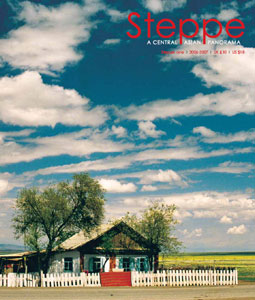
• The cover photo, for starters, is of a “little house on the steppe” in SE Kazakhstan, in the middle of the the flat flowering plain with low blue mountains off in the distance.

• An article on the detailed golden ornament of Scytho-Siberian animal art, currently on display in the Of Gold and Grass: Nomads of Kazakhstan” exhibit at the Mingei International Museum in San Diego.

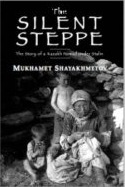
• A review of The Silent Steppe: The Story of a Kazakh Nomad Under Stalin by Mukhamet Shayakhmetov (currently only in print in the UK), one of the only published first-hand accounts of the 1932-1934 famine. Caused by forced collectivization of the nomadic population, 1.7 million Kazakhs (one-fourth of the entire population) died of starvation during this time.

• Five of the “Top Ten Bus Stops” of Central Asia are in Kazakhstan,including a yurta and a mini-mausoleum.

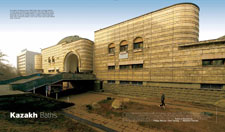
• A multi-page feature on the Arasan Public Baths in Almaty. Sigh. Oh to be there . . .

• A short review of The Story of the Apple, the history of which would be utterly incomplete without its birthplace in the orchards of SE Kazakhstan.

• And, for sporting folk, a ski guide to Central Asia, with downhill (Chimbulak near Almaty), cross country (everywhere,including along Astana’s River Ishim) and (gulp) heli-skiing in the Tian Shan. Kazakhstan’s got a lot going for it in its bid for an upcoming Winter Olympics, including the gi-normous skating rink at Medeo (on the way to Chimbulak).

And of course, much more. My only vested interest in Steppe is wanting enough subscribers to keep the magazine afloat, since it’s the only publication even remotely of its kind. I am waiting for a feature story on the valenki factory near Semey/Semipalatinsk (hint hint) - aren’t they just gorgeous?

Find out about the rest of Steppe, and how to subscribe, at their website. My subcription is a $43 indulgence I’m completely satisfied with.

С Новым годом!
Happy New Year!

1/8/2007 - A review of Steppe was posted today at EurasiaNet, whose writers know a lot more than I. They like it too.

Tuesday, December 05, 2006

Wind Rider: Horses and History in Kazakhstan

Several weeks ago, archaeologists published findings of what is believed to be a prehistoric corral, at the Botai settlement of Krasny Yar in Northern Kazakhstan (articles at LiveScience.com and Scientific American.com). Since the only animals in the southern steppe that might have needed a corral would be horses, this discovery is seen as further evidence that the Botai people domesticated and possibly even learned to ride horses as early as 3500 BC.

Though research shows the Botai to have been a completely new kind of civilization from previous steppe peoples, interest and research has been concentrated on their relationship to the wild horses of the steppe, and on what light their civilization can shed on the history of equine domestication. Archeological sites in Ukraine have some evidence of earlier horse domestication (breeding them in captivity as opposed to taming wild horses), ca.5,000 BC, so the question of “who rode first” is a hotly debated topic in contemporary archeology.

The domestication of the horse was a watershed moment in human history -- with a year-round source of meat and milk (as cattle have been in the West), nutrition and migratory patterns of the nomads would have been drastically affected. Once horses were used as tools, for carrying loads, and for travelling long distances when migrating and hunting, the possibilities for human development increased dramatically. Until recently, the Botai have been considered to be Caucasoid/European, but other researchers have used computer modeling to reconstruct a Botai skull, the results of which resemble a modern Kazakh male (the image actually looks a lot like a young Kazakh grad student I know).

Kazakhstan.neweurasia.net has an entry on the recent discoveries, with lots of links to great background research.

With synchronicity factor in full gear, I soon stumbled across a recently published young adult novel called Wind Rider. The author, Susan Williams, has written a richly-imagined tale of the first person, a teenage girl, ever to tame and ride a wild horse in the Central Asian steppe. Young Fern, daughter of a family of hunting and gathering Earth People, finds more comfort in her animal friends than with humans, and is not looking forward to the limited life destined for her as a woman. The five families of her clan travel together during the warm months, and live with other clans in a protected settlement of pit houses during the storms of winter.

One spring, Fern saves the life of an orphaned filly, which she names Thunder. Secretly keeping Thunder in a makeshift corral to protect her from being killed for food, Fern tames the filly and learns to use the young horse’s strength to assist her and her people. In dreams, she has seen herself flying on the back of a horse, and eventually Fern learns to ride Thunder, inventing a leather bridle, bone bits, felt blankets and other riding tools.

This imagined scenario is entirely plausible, and the details are well-researched (as described in the author’s note at the end). For example, the Earth People (Botai?) respect and pay tribute to the life spirits inherent in all things, a possible precursor to the animistic beliefs of pre-Islamic Kazakh nomads. They fear the Night People, a harsh, cruel tribe who worship the god White Horse as master and creator. Night People keep a captured white stallion as the incarnation of White Horse, and to this horse they give ritual sacrifices; there is archaeological and anthropological evidence of horse-worship among the pre-Botai cultures on the steppe.

The novel is well crafted, though the basic story isn’t wildly original. For readers looking for a strong female coming-of-age tale, for all horse-lovers, and anyone interested in Kazakh prehistory, this is a solid recommended read.

For middle graders & up.


More About the Book
• Author Interview with Susan Williams
• Author's Website
• Chapter One Excerpt


More About the Botai Culture
• Prehstory of Kazakhstan at the Carnegie Mellon Museum
• Botai Discovery page (in progress)

Saturday, November 04, 2006

An Old Father’s Wisdom : A Kazakh Tale

There was once a very wise old man, who was also very poor. When it came time for his only son to make his way in the world, the old man had nothing to give him but advice.

“Never make friends with clever people, don’t borrow money from the newly rich, and never tell a secret to anyone, not even your wife,” he said. The young man took these words to heart, left his father and was on his way. As time passed, the young man made a good life, married, and was happy. He considered his father’s advice often, remained curious, and decided to put it to the test.

He struck up a friendship with the cleverest man in the village. Not long after, he borrowed a sum of money from a neighbor who had recently become wealthy. A short time later, he went into his herd and slaughtered a sheep, being sure to cover his clothing with blood.

Back at his home, he asked his wife to clean the bloody garments. “I will tell no one but you,” he said. “I have killed a man. I will be done for if anyone else finds out. Keep this secret between us.” His wife cleaned the clothing and for a while told no one what her husband had done. Then one day they had a terrible argument. The wife went directly to the village elders and reported all that her husband had told her. He was immediately arrested, and was being taken to be judged as a murderer.

The young man saw his friend along the way, and asked for his testimony of innocence. But the clever man, though he knew full well that only a sheep had been killed, did not want to get risk himself by getting involved, and said “I am sorry, I cannot help you. I wish you good luck.” The neighbor who had loaned money heard of the trouble, and began to worry that he would never be repaid if the young man were punished for the crime. He demanded the return of the entire sum immediately.

Eventually, the young man was taken to the khan for judgment. “I have killed no man,” he said, “only a sheep. My only crime is to doubt my father’s advice.” And the young man told the khan everything, and how his father’s words had proven true. Upon hearing the tale, the khan decided that the old man must indeed be the wisest man in the world, and the son a man of good sense. He brought both the father and son into his court, and benefited from their advice for many years to come.

====

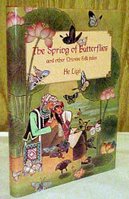
This tale is a retelling of “The Poor Man and the King” , collected in The Spring of Butterflies and other folktales of China's minority peoples translated by He Liyi (check your public library, where I found the book, or buy used from Amazon.com).

Insulated from Soviet Russification by national borders, and from Chinese Communism by sheer distance (Xinjiang is around 1,500 miles from Beijing), the ethnic Kazakhs who fled over the mountains to northwestern China maintain a strong tradition of Kazakh language and and culture.

Tuesday, October 31, 2006

Central Asian glossy launched


Just heard today about a brand new photojournal magazine, covering all of Central Asia (including the Xinjiang Uighur Autonomous Region in China, home to some million or so ethnic Kazakhs). Steppe magazine comes from the UK, and will be published twice a year (October and April). The premiere issue includes an article about the Arasan Public Baths in Almaty, and one about the Akhol Teke, a Turkomen horse breed once exclusively ridden by the Kazakhstani national equestrian team.

The magazine's
website has information about the all the articles in the premiere issue, as well as subscription information. I couldn't resist, and have subscribed. I hope I don't regret the impulse-- at approximately $43USD for two issues, if I weren't me I'd wait for a first-hand review. I'll post one as soon as mine arrives.

Update 11/6/2006 -- Steppe has the official stamp of approval from the Embassy of Kazakhstan; the magazine's press release was forwarded to Embassy newsletter subscribers by Roman Vassilenko, Embassy Press Secretary. According to the release, the first issue also includes a feature on how to cook plov, and the top ski spots in Central Asia. Shell Oil is one of the sponsors of this issue. It's coming out with a big splash - keep your fingers crossed that it's going to be a source of real cultural information, and not just an expensive, pretty hotel-room publication.

Monday, October 23, 2006

Who Lives in Kazakhstan?


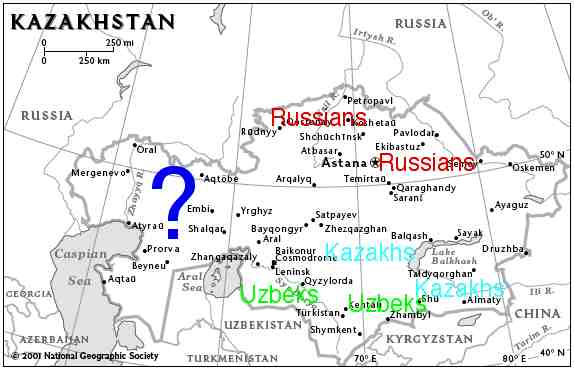
While other sources (including US government estimates) have stated the population to be just over 16 million, according to Kazakhstan’s Statistics Agency, the population was just over 15 million people as of January 2006, and represented over 120 different “nationalities” (ethnic and language groups).

At the time of independence in 1991, four-fifths of all Kazakhstanis were either Kazakh (42%) or Russian (37%). This demographic has shifted substantially in 15 years, primarily through immigration and emigration, and the overall population figure has decreased. Large numbers of European Kazakhstanis emigrated to the coutries of their forebears, especially the Russians and Volga Germans, while the government has encouraged expatriated ethnic Kazakhs in other countries to return (900,000 lived in Uzbekistan alone; 1 million Kazakhs live in Xinxiang in Western China, and another million or so in other Central Asian countries & Russia). This movement, combined with a higher birthrate among the Kazakh population, has dramatically changed the ethnic balance over the past 15 years and given Kazakhs a clear majority. In 2006, the population is 58.6% Kazakh (almost 9 million people) while the percentage of Russians has dropped to 26.1% (just under 4 million).

A list of ethnic groups making up the remaining 15.3% of the population includes Ukranians, Uzbeks, Germans, Poles, Uighurs, Tatars, Koreans, Chechens, Turks, Jews, Azeris, Ingush, Kyrgiz, & Karakalpaks, just for starters. Given Stalin’s penchant for shipping annoying people to party exile and/or gulags on the steppe, pretty much any nationality that was ever under Soviet rule can still be found in Kazakhstan.

Who Lives Where?

Concentrations of nationalities are where you might expect them to be. Russians/Europeans/Slavs live mostly in northeastern Kazakhstan, in East Kazakhstan, Karaganda, Pavlodar, Kostanai, and Akmola, nearer Russia. More Kazakhs live in the south (and more Kazakhs who speak Kazakh); Uzbeks live in South Kazakhstan & Zambyl regions (bordering Uzbekistan). Every nationality is found in Almaty and its surrounds. In the official report (at least as published by Kazinform in May), there is no mention of any nationalities in the northwest or west. Everybody in Uralsk, Aktau & Atyrau, not to mention the thousands of foreign oil company managers and workers in the regions, must commute from Astana!

Semantics; or, Citizen of Kazakhstan ≠ Kazakh


In the United States, there is an understanding of the “hyphenated American,” as in Japanese-American, Afghan-American, Irish-American (as well as Native American), to describe the ethnic or national heritage of a United States citizen. The citizenship itself is simply “American.”


In Kazakhstan, the citizenship is “Kazakhstani” (Kazaxstanski), no matter the nationality/ethnicity. You’ve got Tatar-Kazakhstanis, Russian-Kazakhstanis and Kazakh-Kazakhstanis, but not the hyphenated system; it’s just Tatars, Russians and Kazakhs, all of whom are Kazakhstanis.


We English-speakers love to abbreviate, but “Kazakh” isn’t a short way of saying “citizen of Kazakhstan” -- and it’s not nearly as funny as the time President Kennedy declared he was a pastry (by mispronouncing “Berliner” in Berlin).

Tuesday, October 10, 2006

Asyl Azhem


This is one of my favorite of the Kazakh/Kazakhstani music videos that have been uploaded to YouTube. It's just gorgeous (and look at all that amazing jewelry). The artist is Qaraqat (or Karakat).

Check YouTube for the video for Ayaulim, another Qaraqat song (with a modern setting).

Thursday, September 28, 2006

Le Seigneur des Aigles

Synchronicity abounds. I found this 30-second clip from "Lord of the Eagles" today during a random search (my first) on Google video. This version has French-accented French narration, but all the major players appear -- Alik, son Nurlan, and the mighty Tengere.


Tuesday, September 26, 2006

Father of Eagles


Every so often, when at the public library, I’ll type “Kazakhstan,” or 'Kazakh” in the catalog search box, just to see what shows up. A few months ago, this casual search turned up a real gem -- a documentary video called Lord of the Eagles, that I’d never heard of, or seen any reference to at all. This 26-minute film, originally released around 1991, is a strange and beautiful animal -- French-produced, filmed in Soviet Kazakhskaya, with Kazakh dialogue and French-accented English narration. Nonetheless, this documentary won a couple of nice awards when it was released in the US.

After keeping it for a while (and racking up some overdue fines), I watched this short film, which then became part of my more-or-less circumnavagatory tour around KZ.

This is a wonderful piece, documenting the Kazakh eagle hunters of the Tien Shan (the mountain range south of Alma-Ata/Almaty). Cultures around the world have traditions of training hunting birds, such as falcons and hawks. The Eastern Kazakhs (I assume the Greater Horde) paired with the great Golden Eagle, which, as a bird of prey, is capable of bringing down even foxes and wolves, whose pelts are the livelihood of the eagle masters.

Lord of the Eagles follows Alik, known as “the father of the birds” and his golden eagle partner Tengere, over their last season together. During this time, Alik teaches his young son Nurlan (who’s about ten years old) the secrets of the eagles -- their language, and the rhythms of a partnership. They capture a younger eagle, whom they name Keitan, and Nurlan becomes Keitan’s partner, learning from father to son, teaching and learning from from eagle to boy, how to work together as a symbiotic team. The eagle is symbolic of, as Alik says, “the beauty and the cruelty of the world.”

In a way (intentional? who knows?), Lord of the Eagles is also a metaphor for the journey though parenting. One of the themes of the documentary is that it’s time to set Tengere free, to find a wife and have a family. Alik says “I have been ten years with Tengere. Tomorrow, I will let him go.” Human parents generally have more than ten years, but we all reach the point of letting go. Would that we all do it as gracefully as Alik does his partner Tengere.

I have yet to find a copy of this video for sale. Keep checking Amazon.com and eBay, but in the meanwhile, check the catalog at your local public library (which probably owns more on Central Asia than you thought). You might find your own undiscovered gems. And then, please, pass them on to the rest of us.


Thursday, September 21, 2006

Finding the Aral Sea (sort of)

Journalist Tom Bissell’s Chasing the Sea: Lost Among the Ghost of Empire in Central Asia, a non-fiction travel history and memoir, turns out to be less about the death of the Aral Sea (shared by Kazakhstan and the NW Uzbekistan region of Karakalpakistan), and more about the culture, politics and history of the people of Uzbekistan. Bissell was an abject failure as a Peace Corps volunteer in Uzbekistan -- he had a total physical and emotional breakdown and left within the first six months of his tour. Revisiting those ghosts, he returned to Uzbekistan five years later (in 2001) on assignment to write an article about the Aral Sea (his conclusion -- the Uzbek side is a lost cause). Before he ever gets to Karakalpakistan, though, Bissell visits Samarkand, Bukhara, his Peace Corps host family, and makes a side trip through Kyrgystan for the funeral of an Uzbek mountain climber. He ponders on the influence of a fierce and unforgiving environment on the development of bloody and corrupt empires (both past and present). It’s well-written and engaging, with occasional wise observations and laugh-out-loud ironic comments.

Though they share a fairly long border, Uzbekistan and Kazakhstan do not share the exact same histories. The cultures spread along the Silk Road touched the southern parts of Central Asia, only occasionally moving through what is now Kazakhstan. Kazakhstan was long populated by nomadic groups, moving to the best grazing areas with the seasons. Nomads are notoriously hard to govern -- as Hugh Pope writes in Sons of the Conquerers, you can’t rule (or convert) people you can’t find. Further south, away from the steppes, the people were more settled, which gave rise to cities, trade, science, architecture, more religion and a different kind of literary culture. Even the music has a different sound and purpose -- urban vs. nomadic. But that’s a different book review altogether . . .

I’ve been musing on the state of Central Asian scholarship, at least as it is published in English. In the past decade or so (since the fall of the Soviet Union), most research and writing on the region has been done by scholars trained in Soviet studies (Martha Brill Olcott, a fine thinker and scholar, is an example), so their insights and analysis are virtually always from the Russian perspective. A few researchers approach the region from the Islamic or Turkic perspective, either fretting about Islamic fundamentalism, or seeing all speakers of Turkic languages as little cousins of Turkey. A small, but hopefully growing, new breed of Central Asian scholars is emerging. Their interest begins in Central Asia -- from Kazakhstan, Kyrgistan, Uzbekistan -- and radiates outward from that center. Tom Bissell’s book is an example of this viewpoint. His interest in Central Asia comes solely from his experiences in Uzbekistan, so all of his research, scholarship and writing radiates from that center. Two places for Central Asian-centric thinking are Registan ("All Central Asia, All The Time"), a blog with politics and cultural analysis, originated by a former Peace Corps volunteer to Uzbekistan and current graduate student in Central Asia studies, and The Roberts Report, by a professor of Central Asian Studies at Georgetown University. Recently, another website, KZBlog, has revived, with a focus on culture and daily life (as viewed by an American working long-term in KZ). Politics (however entertaining) are not the focus of News from the Caravan -- check out these sites to keep up on the latest events.

Sunday, September 17, 2006

Circling KZ in Books and Film

Greetings! After a summer-long hiatus, spent in a state a whole lot greener and only slightly less land-locked than anywhere in Central Asia, I resume. Over the past few months, I’ve vicariously circled around Kazakhstan, having watched a couple of documentary-type films and read a few books, all of which touch on Soviet Central Asian history and/or culture, but not a one of which is about Kazakhstan directly. It’s been fascinating.

First, a film and a book --

The National Geographic feature film Story of the Weeping Camel, isn’t exactly a documentary and isn't exactly fiction, but a little of both. It’s filmed in the Mongolian desert, and tells the story of a rare baby white camel that is rejected from birth by its mother. The family of herders try one strategy after another to encourage, teach, trick and cajole the mother camel into caring for the starving and sad baby until at last, traditional Mongolian music and song break through to her stony heart. The daily life and customs of these nomads seems very similar to that of the ethnic Kazakhs, who also live in Mongolia and China in addition to Kazakhstan. The portrayal of the family of nomads -- a cluster of three gers (the Mongolian yurta) houses young parents with two sons, and two sets of grandparents -- makes clear details that are hard to figure out from just words and pictures. How exactly do those flaps on the yurta work? Seeing the father prepare for an impending sandstorm explains all.

10/2/2006 -- National Geographic has a great website for this film, with lots of additional information on the land, people, traditions and animals of the Gobi Desert.

Then north and west to Russia: After a third person said to me "surely you've read The Master and Margarita," (and I hadn't), I began this satiric novel by Mikhail Bulgakov. What happens when Satan in disguise pays a visit to fervently athiestic Soviet Moscow, and what has Pontius Pilate got to do with it all? Bulgakov began the novel in 1928, burned it (just as the Master burns his manuscript after intense negative criticism), picked it up again in the 1930s, and worked on it off and on 'til his death. His wife finished and polished the novel, which is now regarded as one of the greatest Russian novels of the 20th century. In a bitingly funny and fantastical way, Bulgakov’s story shreds the pretenses of the Communist literary scene and the immobility of Soviet society, assails the quality of party poetry, and rewards courage and steadfast devotion in his main characters. And it's quite a good read, too.

Next stop, to Uzbekistan, the country that shares the Aral Sea with Kazakhstan, with Chasing the Sea: Lost Among the Ghosts of Central Asia, by former Peace Corps volunteer Tom Bissell. More about this fascinating book next time . . .

Sunday, June 11, 2006

Aldar Kose Tricks the Bai

On a bitterly cold winter's day, Aldar Kose was travelling across the steppe. "Crunch, crunch," went his rickety horse's hooves through the snow. "Brr, brr," went Aldar Kose, as he shivered in his thin, hole-ridden coat. As he struggled along, he saw the local bai, or rich man, headed toward him. Immediately, Aldar Kose threw open his coat and whipped off his hat.

"Greetings, Aldar Kose! Why, you are burning up. What is the matter?" said the bai.
"It is this magic coat," explained Aldar Kose. "It is far too warm. The holes let all of the cold out, and what little cool air does come in, blows right out through the next hole. I am melting from the heat."

Upon hearing this story, you would think that the bai should have known better. After all, Aldar Kose was known far and wide as the cleverest and trickiest man on the steppe. But the bai only heard that Aldar Kose had something wondrous that he himself did not, and was gripped by the desire to have it for his own.

"My poor man," said the bai. "How you suffer! Let me help you. I will trade my fur coat and hat, which are just right, for your holey, too-warm ones, so that you may be more comfortable on your journey."

Aldar Kose thought about the bai's offer, hiding his smile behind his hand. "Sir, you are generous, but I cannot accept the trade," he said. "This coat was enchanted and given to me by my father, whom I dearly miss."

Now the bai could not stand not to get what he wanted, and so wanted the coat even more. He said, "I see it is difficult for you to let me help you. Take my coat and hat, and my horse, which rides like the wind. The breeze will cool you."

Aldar Kose hesitated a moment. "On the one hand, I should honor my father's warning, though I don't recall what it was. On the other hand, he always did encourage generosity in others, so I should allow you to help me."

The bai could no longer hide his impatience to own the magic coat. "Then you cannot refuse my generous offer. Take the fur coat, hat, horse and this bag of gold for your father's wisdom, give me that coat and consider yourself fortunate in the trade!"

Well, quick as a flash, Aldar Kose surrendered that coat of holes and the tired old horse to the bai. He put on the fur coat and hat, took the bag of gold, and mounted his new horse. The bai now sat on the old horse, wearing the holey coat and looking very pleased with himself. As Aldar Kose turned to ride away, he paused. "Aha! I've just remembered my father's warning," he said. "The magic in the coat works only for me. Good-bye!"


~ ~ ~ ~ ~ ~ ~
Aldar Kose is the trickster of Central Asian folklore, similar to Anansi the spider of West Africa, or Br'er Rabbit and Coyote in American tales. Often he uses his wit and cleverness to aid the common man, or to turn the tables on the greedy or selfish. He appears in Uzbek, Tatar, Kyrgiz, and Karakalpak folktales as well as in numerous Kazakh variants.


A more elaborate version of "Aldar Kose Tricks the Bai" is included in Tales Told in Tents: Stories from Central Asia.


Another nicely illustrated collection of Central Asian folktales is Stories from the Silk Road.

Visit the Silk Road Caravan

Thursday, June 01, 2006

Kazakhstan's Nuclear Legacy: Vika's Story

Many know that Kazakhstan was the birthplace of two of the Soviet Union's biggest steps into the modern age and Cold War power. One step was at Baikonur in SW Kazakhstan, where the cosmonauts first launched into space and set off a "space-race" with 1950s America.

Another of the USSR's modern experiments took place in an "uninhabited" area of the northeastern steppe, near the city of Semipalatinsk, now know by the Kazakh name Semey. In 1949, the first of over 400 nuclear weapons tests exploded over the Semipalatinsk Test Site. There are estimates that over 200,000 people, mainly Kazakh nomads living in the fallout areas, died from radiation-related illnesses in the four decades of above- and underground nuclear testing from 1949-1989.

The following piece of oral history was written by former Peace Corps volunteer Ian Woodward, who lived and taught in Pavlodar during his PC tenure. You can read this story and more of Ian's experiences and observations in Kazakhstan on his blog stuck on the 45th parallel.

~ ~ ~ ~ ~ ~ ~ ~ ~ ~ ~ ~ ~ ~ ~ ~ ~ ~ ~

12.20.2005

vika's story

imagine:

the year is 1955 and you are vika, a six year old girl living in makaieen, kazakhstan, a small town of 15,000 people on the eastern edge of the vast kazakh steppe. makaieen is the only world you have ever known. your first trip to the big city, pavlodar, is still a year and a five hour car trip away. when you are not in school you play outside with other children from the neighborhood. from time to time you walk with your friends to the edge of town and peer into the distance.

in every direction from makaieen all that can be seen is steppe. no hills. no trees. no buildings. only brush. a flat endless brush. the view into the steppe from makaieen is the same no matter which direction you are looking. the sun rising and setting provide the only perspective against an endless horizon.

one day you are playing with your friends near the broken swings outside your government provided apartment. it is early, around 8:00 in the morning. the air has the spring freshness in it that comes from a morning with a light dew. all of a sudden you stop playing and gather with your friends to look out into the steppe. something has happened, something is different.

a gigantic cloud is growing, apparently from the ground. it is huge, easily the largest thing you have ever seen. its colors are on the edges of color. where orange becomes red and where blue becomes violet. they are vivid, bright, and captivating. you cannot take your eyes from it, it is amazing. it is beautiful.

the cloud, in the shape of a mushroom you have now realized, grows in size until it stands many kilometers into the air. it doesn't move, there is no wind. it also doesn't dissipate. it just stays there, as if it is waiting for you to go along with your day.

after some time you comply and begin to play again with your friends, but all the while sneaking glances over your shoulder at this giant beautiful mushroom cloud standing over your small town.

a few weeks later all of the residents of makaieen are gathered in the main square. they have set up bleachers for the older citizens to sit, and the rest stand around waiting for something to happen. finally a man comes to the podium under a 35 foot statue of lenin and says that today the citizens are makaieen are going to serve the motherland. the people of makaieen will be witness to the might and power of mother russia. you, the people of makaieen, have the rare opportunity not only to bear witness but to show your strength to our comrades in moscow. this man, a member of the local communist party leadership, directs your attention to the steppe and the distance.

you don't know what is going to happen, so you grip your mothers hand with a little extra strength. "vikoninka oo spakoisya" (vikoninka, don't be scared) your mother whispers into your ear.

just then an explosion rips through the silence and you feel the earth beneath you shake. another cloud begins to form on the horizon and the town realizes that it is witnessing an above ground testing of an atomic bomb.

fast forward to 2005. your name is still vika and you live in a 7th floor apartment in a nice section of pavlodar. after preparing dinner for your house-bound mother you sit down to enjoy a meal in front of the evening news. the president of kazakhstan appears on the screen and part of a speech given earlier in the day is being shown. the president is talking about the nuclear testing that occurred in the area of the steppe that stretches from semi-polatinsk to makaieen. he mentions that over a period of 50 years there were 456 nuclear tests. most below ground, but many above.

you haven't thought of those days in your childhood for quite some time, but the images come flooding back. the giant cloud remains as vivid in your mind as it was that spring day. the colors just as vibrant and beautiful.

the president finishes his remarks by saying that people who lived in the area of the tests will be receiving a payment from the government. the amount will vary depending on how many years you lived in the area, and in which towns.

you, vika, open the paper the next day to read the news. you want to know how much your health is worth to your government. after some careful checking, and a search of your house for the seven required documents, and a trip down to the local offices you know the answer. your bravery, and the possibility of diseases yet to come is being rewarded with a check.....

50 dollars.

~ ~ ~ ~ ~ ~ ~ ~ ~ ~ ~ ~ ~ ~ ~ ~

Read more about the Soviet nuclear testing and continuing social, environmental and health concerns:

Profile and interview with Kaisha Atakhanova
, Kazakhstani biologist specializing in the the genetic effects of nuclear radiation and 2005 Winner of the Goldman Environmental Prize.

"Life Under a Nuclear Cloud". Rosemary Righter in The Times (UK), 8/1/2002.

"Cold War Legacy." Sabrina Tavernise in The New York Times, 5/19/2002.

Monday, May 22, 2006

Aigul Ipakchi: A Kazakh-American Hero

Aigul Buyuk Kiereli Ipakchi immigrated to the United States after WWI as a refugee from Russian/Soviet Kazakhstan. She forged a successful life for herself as a professional nurse and found a true life partnership with a fellow refugee (from Azerbaijan). Her granddaughter Minna contributed this story about the exemplary woman Aigul continued to be, in the foreign and new land of America.

===================

It was 1958, a typical small-town American 4th of July parade. The high school marching band was there, the local fire brigade, some old men from some fraternal organization or another, etc., etc., all marching down Main Street in the heat, nothing unusual. But what no one knew was that some local boys had gotten into the fireworks meant for later that night and they were trying to light them in a field beside the parade route. They went unnoticed, until suddenly there was a flash of light and a loud BOOM!

Everyone watching the parade turned to look, the passing band stopped playing... and we saw a patch of grass was burning and two of the little boys were on fire, shrieking in terror and running in circles. People in the crowd started screaming and some began running toward the field, young men from the local fire company in the lead, but it was far off and the little boys were panicking and thrashing around, only making their clothes and hair burn faster. My sisters and I just stood there stunned, eyes wide and mouths literally hanging open, when in the next second Apa-- about 60 years old at the time -- raced past us on one of the police horses that had been pulling a small float in the parade. A woman standing in front of us literally fainted at the sight of her charging past on the horse. Everyone was screaming and pushing so we climbed on top of a car to look for Apa, to make sure we didn't just imagine it was her. And yes, it was her. People were diving out of the path of the horse as she galloped toward the field at a truly amazing speed, a blur of brown horse and green and pink flowered dress, leaping over all obstacles including, last, a tall metal fence! In the next second she had reached the boys, thrown them both to the ground, and she was beating the flames out with her bare hands!

It happened so fast, none of the men running toward the field had even made it to the metal fence by the time it was all over, the flames were out and she was running, carrying the smallest boy, screaming for the guys at the fence to stop gawking and go get an ambulance. Obviously no one had ever seen anything like that before, and certainly not in a tiny town on the Atlantic seaboard. The little boys had been badly burned and she was burned too (she had scars on the palms of her hands for life) but both boys survived, thanks only to her courage and quick thinking. (The younger boy, who had been the most seriously injured, actually visited her for years afterward, even as an adult. We got to know him pretty well...he always called her "my guardian angel.") Once the initial shock wore off, and we knew she was ok, my sisters and I were just bursting with pride over this rescue. Our grandmother was like a superhero right out of the movies and we figured, well, this is what it must mean to be Kazakh!

The following day the incident appeared in the local newspaper, a front-page story: "Mongol Horsewoman Saves Boys Aged 6 and 9." Back then (not unlike now, really), no American had ever heard of anyone (or anywhere) from Central Asia but Ghengis Khan! This was the '50s, you know -- American women weren't even supposed to work outside the home, so there was also no mention of the fact that our grandmother was a registered nurse -- a high level of education for a woman back then-- and that she had worked for 6 years in the burn unit. No wonder she understood it was only a matter seconds between life and death for those boys. We understood then how much our grandmother had accomplished, but also how much she had to overcome. Not only a non-traditional grandmother, but an Asian woman, from an unknown Soviet nation during the Cold War. She was an amazing woman, and if I am 1/100th the person she was, I'll be happy.

I'm sure we're missing many important events, too, because she really didn't talk about herself much, she was so humble, maybe too much so. You know, she never talked about the rescue at the parade, either -- she would have seen that as 'impolite' somehow or like boasting or something -- I think in part because those little boys had been so badly hurt, it wasn't a pleasant memory for her. She couldn't escape that story, though, because there were too many witnesses, myself included, so she humored us kids and let us tell the story to our friends. The only condition seemed to be that she had the last word about it, always adding at the end that it was "really an outstanding horse" and that she knew in an instant from his eyes that he was special, she and that horse were "in agreement" on what had to be done, and that's why they were successful. (I'm not kidding about this. She really felt the horse was heroic, not herself!)

When we were kids my sisters and I actually thought of our grandmother as almost super-human or something, too, especially after this one episode -- and I think that single incident really shaped what we kids thought it meant to be Kazakh.

Tuesday, May 16, 2006

KZ in the NHL


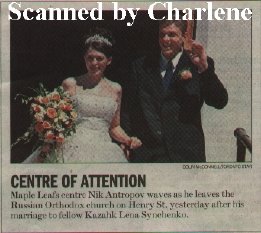
Our next story is about a hockey player from Kazakhstan, Nikolai Antropov. He was born in February, 1980, in Ust-Kamenogorsk, capital city of hockey in Kazakhstan. His father brought him to a hockey school and a kid started his hockey career. "My father was my first influence in hockey," says Nikolai. Soon he became one of the major players of his team “Torpedo Ust-Kamenogorsk”. He played two seasons in Kazakhstanian league, 1996-1998. His scores were not bad at all for the sixteen-year-old youngster; in 50 games he scored 17 goals and made 25 assists. In 1998 he moved to the Russian league, like all the best players from the former Soviet Republics. He played for “Dynamo” Moscow one season (30 games, 5 goals, 9 assists). He also represented Kazakhstan at the World Junior Championships collecting eight points (three goals, five assists) in six tournament games. In 1999 he was ready for the next step. Nikolai’s talent was noticed by the NHL and at age 19 he signed a contract with the Canadian Toronto Maple Leafs as a first round draft choice. Soon he became one of the leaders of the Leafs. In 2 seasons with the AHL St. John’s Maple Leafs and 6 seasons with the Toronto Leafs he has a total of 83 goals and 139 assists, with an NHL total 187 points.

During the 2004-2005 player lockout, Nik went east to Russia, playing for the Kazan Ak-Bars and the Yaroslavl Locomotiv, and by all accounts improved his skating and overall play. He returned to Toronto in fall 2005, and despite an injury plagued season (he underwent knee surgery again in April), Nikki contributed 31 points (12 goals, 19 assists). He is currently one of only two Kazakstanis playing in the NHL. Married to fellow Kazakhstani Lena Synchenko, Nikki is father to two sons. He has also captained the Kazakhstan National Hockey team in the 2002 and 2006 Olympics.


Here are some of Nikki's career highlights:
  • Registered his 100th career NHL point (goal) December 23, 2003
  • Played his 200th career NHL game April 3, 2003
  • Best NHL year to date, 2003-2004, with career highs in games played (72), goals (16), assists (29), points and penalty minutes
  • Ranked 15th in the NHL for game winning goals (6-tie) in 2003-2004
  • Made his first career hat trick in his first season, December 1999
  • Made his first career point in his first NHL game, October13, 1999


•Team Calls Him: Nikki
•Height: was-6'3 now 6'5

•Weight: was-191lbs now-219lbs
•Born: February, 18th 1980
•Place: Ust'-Kamenogorsk, Kazakhstan
•Contract Status: Active
•Shoots: Both (Prefers Left)
•Position: Centre
•Last Amateur Club: Dynamo (Russia)
•Strengths: Size
•Pronunciation: AN-TRO-POV


Nikolai Antropov at Wikipedia.com
Nik's lifetime stats at Sportsnet.ca
Profile at Legends of Hockey.net

Tuesday, May 09, 2006

A Window into Ex-Pat Life, Volunteer Style

Since the fall of the Soviet Union, several Central Asian countries have hosted volunteers from the US Peace Corps as teachers of English ,and as consultants in the growing private business environment. The first Volunteers arrived in Kazakhstan, Kyrgistan and Turkmenistan in 1993. The Peace Corps only works where it is welcome; it suspended the Uzbekistan program in June 2005.

With new Internet technologies, volunteers have been able to share their experiences and insights with family and friends (and the rest of the world) through "blogs", personal websites created with easy-to-manage Internet software. Blogs are as individual as the volunteers (PCVs) -- some are insightful and thoughtful, some cynical, some more intended for close friends than for the Internet public; none are always upbeat and positive. And of course, none of them are representative of official Peace Corps policies or views.


PCV blogs can be a unique way to peer into daily life as an ex-patriot in a foreign land (be sure to look into older archived posts, not just the most recent). Here's a list of some favorite blogs by PCVs around Kazakhstan.

Coming of Age - Ust-Kamengorsk/Oskmen (E KZ)
Ryan Giordano in Kokshetau ( North KZ)
Stuck on the 45th Parallel - Pavlodar (NE KZ)
No longer in KZ
The Durrrty South of Siberia - Petropovlovst (N KZ)
You May Say That I'm a Dreamer . . . - Almaty (SE KZ)
Stanmenistan - Uralsk/Oral (Northwest KZ) No longer in KZ

Monday, May 01, 2006

Rebirth of a Dying Sea

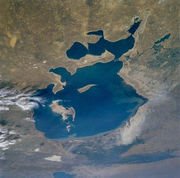
<- 1985="" aral="" as="" br="" from="" in="" s="" sea="" seen="" space="">
With the ever worsening smog in Almaty, the nuclear contamination around Semey and pollution and overfishing in the Caspian Sea, good news on the Central Asian environmental front is a welcome change. In early April, both the New York Times and the Washington Post reported that a World Bank-funded project to restore waters to the Aral Sea, long considered possibly the biggest environmental disaster of all time, is not only successful, but ahead of schedule.

The Aral Sea, shared by Uzbekistan and Kazakhstan, was once the 4th largest inland body of water in the world. It supported a vibrant fishing industry, and the wetlands formed by the deltas of the Amu Darya and Syr Darya rivers teemed with animal and plant life. The Syr Darya begins from Himalayan glaciers in Kyrgistan and Tajikistan, and flows northward from the mountains through southern Kazakhstan, passing Kyzlorda and Baikonur Cosmodrome before emptying into the northern Aral. The Amu Darya flows from Afghanistan through Turkmenistan to Uzbekistan and the southern end of the Aral.

The Aral Sea began to shrink in the 1960s when massive Soviet irrigation canals diverted 95% of the water in the two rivers to cotton fields in Uzbekistan and Kazakhstan. Between water lost to evaporation, and the lack of fresh water to replace it, the Aral had lost 75% of its surface area by 1996. The water became too salty for fish, the dry sea basin blew away in fierce dust storms, weather patterns in the area changed. The port cities of Aralsk (Kazakhstan) and Muynak (Uzbekistan) became stranded more than 50 miles from the coast. Water levels are so low that the sea has split into two, the small North Aral (entirely within Kazakhstan) and the larger South Aral.


The World Bank project is focused on saving the North Aral, and consists of improving the efficiency of the irrigation canals, and an 8-mile dam which was completed last summer. With more water flowing into the sea, the salinity drops, the water rises and reclaims the desert. Project coordinators originally expected the sea to fill in 5 to 10 years, but the canals had been so wasteful of water that improvements made a much bigger and quicker difference than anticipated. Perhaps someday Aralsk will again be a city by the sea.


Background and More Information


• Map of the Aral Sea and Surrounding Areas
• New York Times & Washington Post Articles (April 2006)
•Northern Aral Sea Fills Up Ahead of Schedule as Part of World Bank Project
(February 2006)

•The Aral Sea (The Water Page, 2001)
•International Response to the Aral Sea (Eurasia.net, 2000)
•Release the Rivers: Let the Volga and the Ob Refill the Aral Sea
(cached version from the Internet Archive)
(Proposal to Save the Southern Aral)